

Personalized Oncology Advocacy
Each person is unique. This is especially true when treating cancer. Healthcare professionals do their very best, but they have limited time and resources to dedicate to each cancer case. N1X10 advocates for each person as a unique individual, offering personalized service that helps empower the patient to overcome many of the limitations of standard care.


Personalized Oncology Advocacy
Each person is unique. This is especially true when treating cancer. Healthcare professionals do their very best, but they have limited time and resources to dedicate to each cancer case. N1X10 advocates for each person as a unique individual, offering personalized service that helps empower the patient to overcome many of the limitations of standard care.

The Challenge of Being a Cancer Patient
Receiving a cancer diagnosis can be a very distressing and overwhelming experience which may turn your world upside down. Each person’s experience with cancer is unique and depends on their individual diagnosis, circumstances and coping mechanisms.
The Challenge of Being a Cancer Patient
Receiving a cancer diagnosis can be a very distressing and overwhelming experience which may turn your world upside down. Each person’s experience with cancer is unique and depends on their individual diagnosis, circumstances and coping mechanisms.

Disconnected
Information
Many tests, many physicians and specialists, difficulty in bringing it all together from all of sources

Limiting Care
Protocols
Limited exposure to emerging drugs and procedures that are not yet mainstream

Facility
Constraints
Experts have limited outreach, constrained by local availability
Our Methodology
Gather

Verify

Complete

Educate

Research

Evaluate

Guide

What Our Patients Say

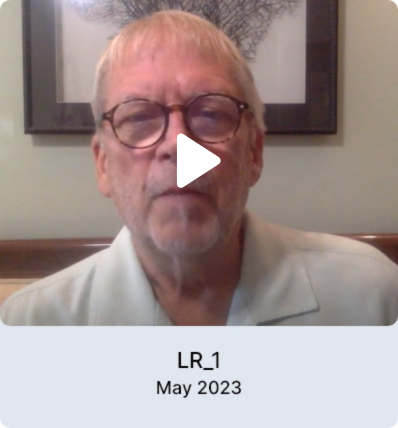
“You helped me not to be alone in front of my oncologist. He had complete control over my fate and treatment course –

Cancer Patient
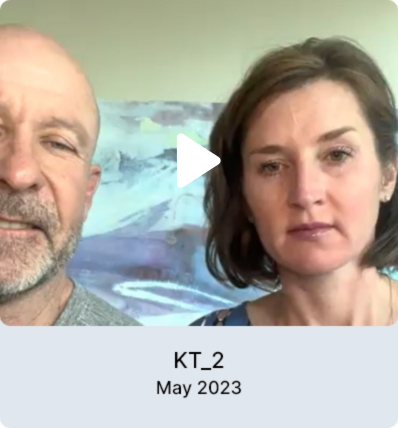
“Our N1X10 case manager expanded our understanding of the complicated cancer world, collected data about my
Cancer Patient
“Our cancer case manager would go through the most relevant treatment options based on our preferences and our limitations
Cancer Patient
“N1X10 knew exactly what to do to connect us with a team of experts while maintaining personal involvement. They
Cancer Patient

How Does it Work?
Why N1X10?
50%
cancer patients reported not being asked treatment preference by oncologist
15-20
mins average length of an appointment with an oncologist
4-12
weeks average time between appointments during treatment
The patient’s voice is often lost in a system of misaligned incentives Patients lack the global view of options, while hospital systems work in local silos. Without the bird’s eye view of what is possible, the patient becomes resigned to the traditional path, and their voice cannot be heard.
Our Proprietary Technology
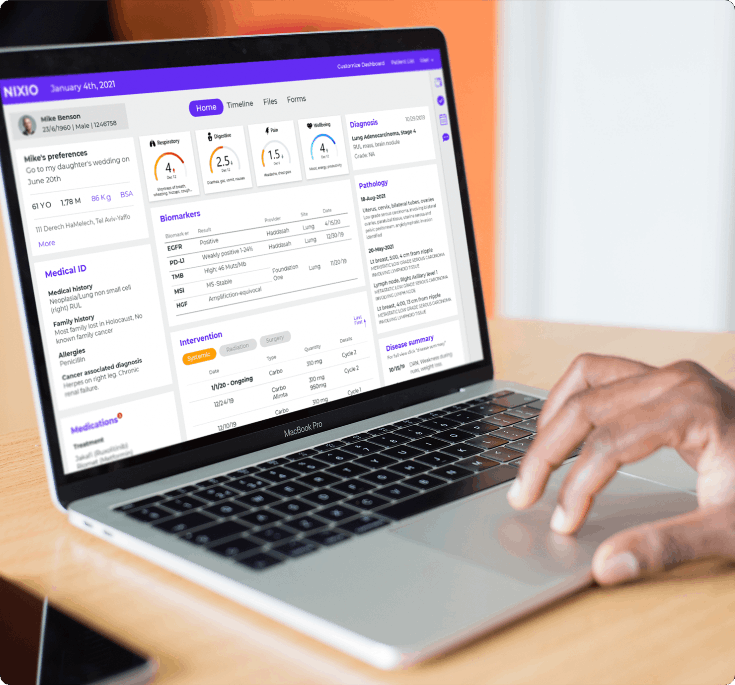
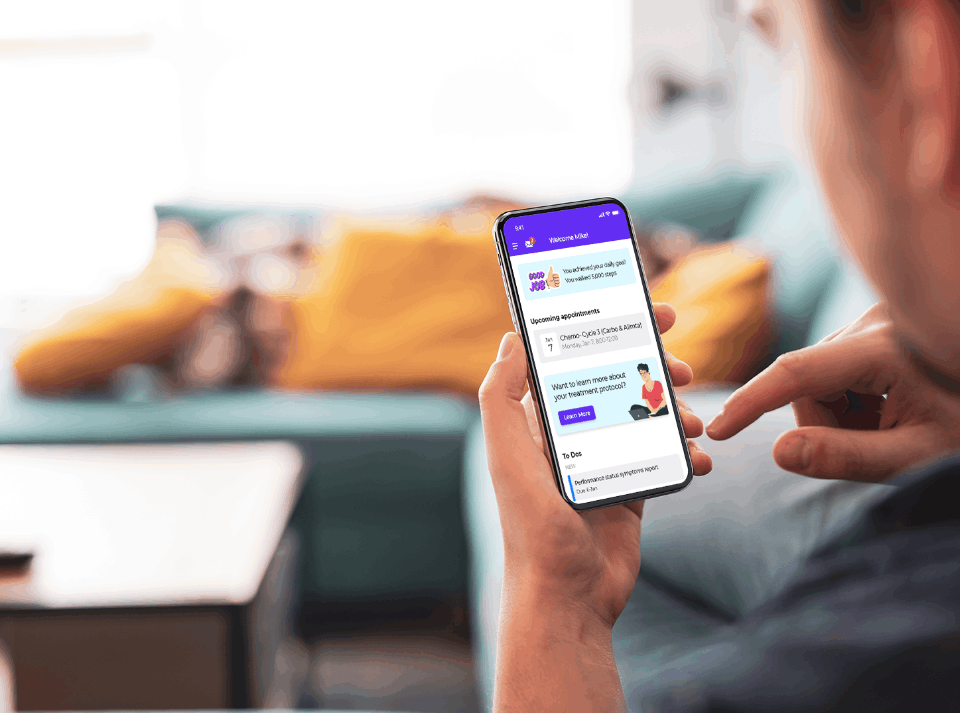
The N1X10 Advocacy Team uses a proprietary and innovative dashboard complemented with a smartphone patient app, both designed to deliver personalized oncology advocacy and tailored patient education. The smartphone patient app allows you to track your symptoms, update preferences, upload data, and stay informed about your treatment journey. New information is continuously integrated into the dashboard to assist your understanding of how to oversee and monitor your personal data.
Our Proprietary Technology
The N1X10 Advocacy Team uses a proprietary and innovative dashboard complemented with a smartphone patient app, both designed to deliver personalized oncology advocacy and tailored patient education. The smartphone patient app allows you to track your symptoms, update preferences, upload data, and stay informed about your treatment journey. New information is continuously integrated into the dashboard to assist your understanding of how to oversee and monitor your personal data.
Cancer treatment can be a long and challenging journey, but with the right support and care, many individuals with cancer are able to successfully navigate the experience and emerge stronger and more resilient.

Frequently Asked Questions
How much patient participation is required?
Empowered patients often have better outcomes which is why your participation in meetings is important. We will provide you with all the education, guidance and support you need throughout your journey.
How long does the service typically last?
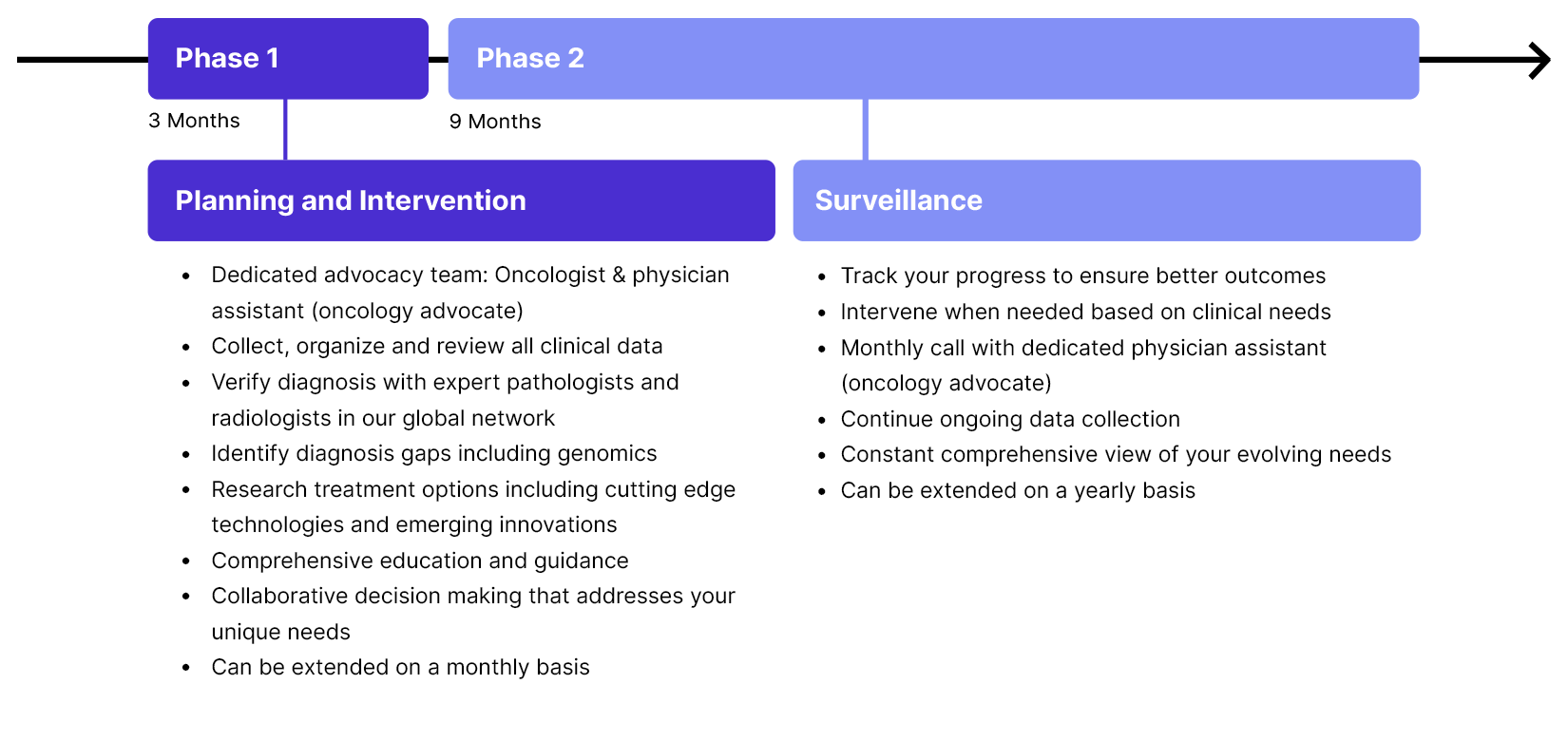
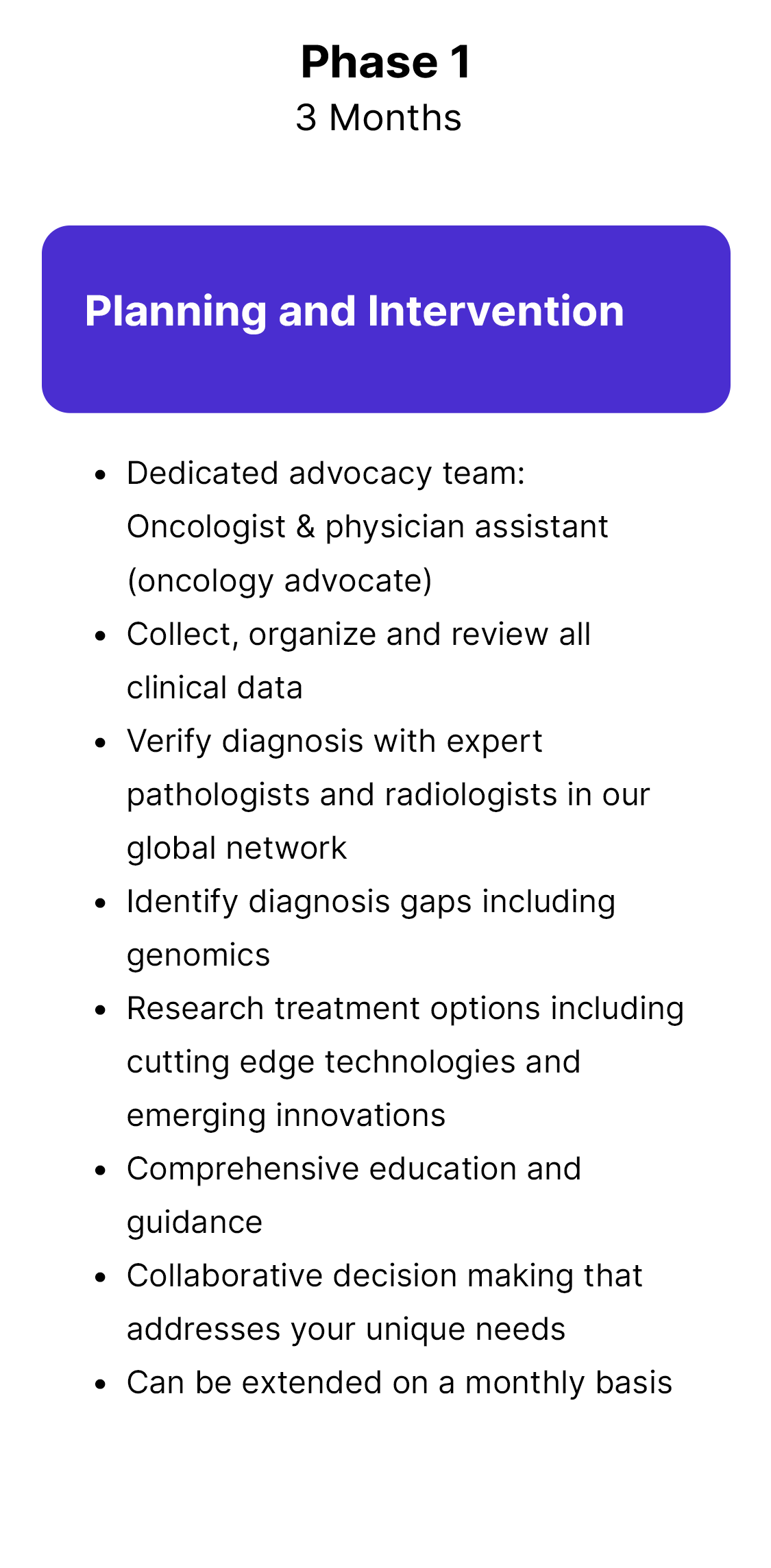
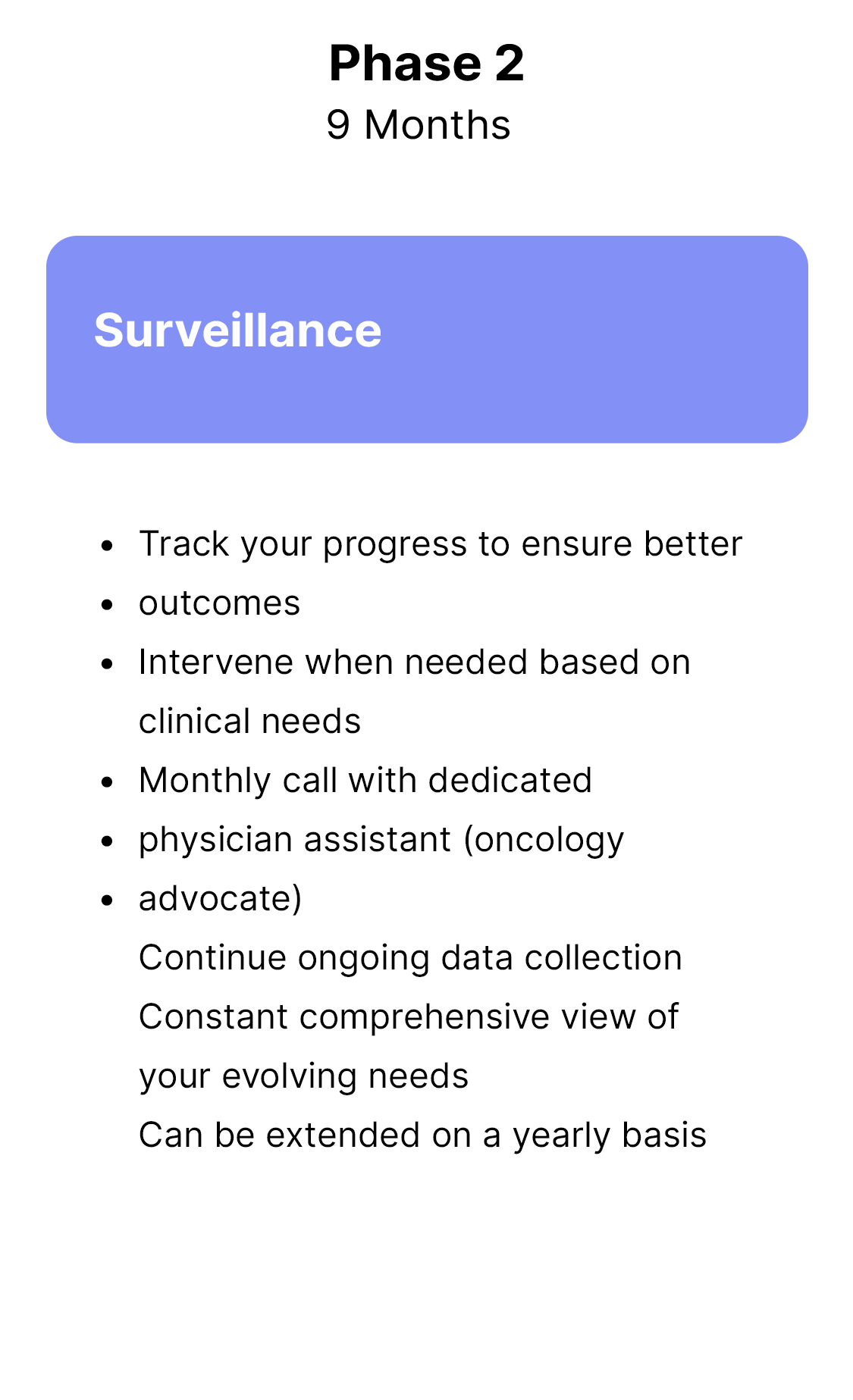
The service starts with a 3-month Planning & Intervention phase. Depending on your condition, this phase can be extended to address your unique needs. The next phase is the 9-month Surveillance phase. You will proceed to this phase after discussing it with your advocacy team and determining that it is the right decision for you. During the surveillance phase the advocacy team continues to support you and, if needed, will discuss the option to resume an additional Planning & Intervention phase.
Can a family member or a friend join me?
Absolutely. It is important to have a strong support circle. We encourage you to include and welcome your trusted family members or friends.
Who will I be in contact with during the service?
Your advocacy team consists of a lead oncology advocate (oncologist) and an oncology advocate (physician assistant). Your main point of contact is the oncology advocate with whom you will have weekly calls and routine check-ins. You will have meetings with the lead advocate on a regular basis and when new options need to be discussed.
Does the service include referrals, coordinating consultants or second opinions? Does it include scheduling of medical appointments?
In general, referrals to medical professionals should be provided by your PCP or treating oncologist. We will provide contact details and make an introduction when needed.
When it is warranted, we will connect you with the best experts for consultation or second opinions.
For those enrolled in the POA Premium plan, we will assist in contacting the experts and coordinating the meeting.
Will the advocacy team that is assigned to me be located near me?
Our advocacy teams are comprised of certified oncologists and physician assistants located in the US and Canada. The advocacy team that will be assigned to you is not necessarily from your local area. The service is provided via digital tools such as Zoom; therefore, your location is not significant. Your team is assigned based upon availability and other factors such as your time-zone.
Does my lead advocate (oncologist) specialize in my type of cancer?
Our lead advocates are certified oncologists with extensive experience, from leading cancer centers, in the US and Canada. The lead advocates are not only experts in oncology, but in being your trusted advocate and assisting you to better navigate your cancer journey. The lead advocate may not be specialized in your unique cancer diagnosis; however, they can identify the best experts using our broad global network.
How do you help me decide what I should do?
In the standard healthcare system, decisions are often made for the patient without considering the patient’s preferences. A cornerstone of our advocacy service is the collaborative decision-making approach. Your advocacy team will help you map all the options, both within and outside of the standard protocol. They will explain the pros and cons of each option while considering your specific preferences. They will then prepare you to make informed decisions with your treating care team. This process will empower you and enable you to navigate your journey on your own terms.
How quickly can we begin?
The service can begin immediately after completing the enrollment process. The first step is collecting all your clinical data and getting to know you and learning about your needs and preferences. This can often take several weeks. When urgent issues require timely decisions, we can begin addressing them immediately while progressing with discussions as we continue to receive data.
Get In Touch
We look forward to
hearing from you!
“*” indicates required fields